
Interactive clinical guide
Three nutritional strategies for thyroid disorders
Hashimoto's, hypothyroidism and hyperthyroidism do not share the same biological pattern. Nutritional priorities change when the dominant issue is autoimmune activity, low hormone availability, impaired conversion, medication absorption, iodine exposure or excess metabolic activation.
There is no single "thyroid diet". In clinical practice, the nutritional approach depends on the dominant mechanism: immune activity in Hashimoto's, reduced hormone availability or impaired conversion in hypothyroidism, and excess hormone activity in hyperthyroidism. Medication timing, iodine exposure, gut function, mineral status and bone protection may all change the priorities.
Choose a pattern
Hashimoto's
Underlying pattern
Hashimoto's is an autoimmune thyroiditis. Nutritional work is not about stimulating the gland, but about reducing avoidable immune and inflammatory pressure, correcting common deficiencies and avoiding excess iodine exposure when the thyroid is immunologically sensitive.
Key nutrients
Prioritise
- Fatty fish
- Brazil nuts in small amounts
- Eggs
- Fermented foods if tolerated
- Cooked cruciferous vegetables
- Legumes if tolerated
- Protein-rich meals
- Assessment of iron, B12 and vitamin D status when relevant
Limit or avoid
- High-dose iodine without medical indication
- Kelp and seaweed supplements
- Excess soy close to thyroid medication
- Gluten when coeliac disease or clear sensitivity is present
- Ultra-processed foods that increase inflammatory load
Hypothyroidism
Underlying pattern
In hypothyroidism, nutrition should support thyroid hormone synthesis, peripheral T4 to T3 conversion and stable energy metabolism. When levothyroxine is used, timing becomes clinically important because coffee, calcium, iron, soy and some gastrointestinal conditions can reduce absorption.
Key nutrients
Prioritise
- Protein at each meal
- Fish and shellfish when appropriate
- Eggs
- Vitamin C-rich fruit with iron-rich foods
- Nuts and seeds
- Iron-rich foods when clinically needed
- Adequate fibre and hydration
Limit or avoid
- Coffee close to levothyroxine
- Calcium or iron supplements close to medication
- Soy close to levothyroxine
- Very high-fibre meals close to medication
- Untreated gastritis or H. pylori when absorption is poor
- Extreme low-calorie dieting
Hyperthyroidism
Underlying pattern
In hyperthyroidism, nutritional priorities are different. The body is exposed to increased metabolic activation, higher bone turnover, greater mineral demand and possible cardiovascular or nervous system symptoms. Nutrition should protect bone and muscle, reduce unnecessary stimulation and avoid excess iodine exposure.
Key nutrients
Prioritise
- Calcium-rich foods
- Vitamin D status
- Protein-rich meals
- Leafy greens
- Cooked cruciferous vegetables
- Berries and colourful fruit
- Fatty fish
- Nuts and seeds
Limit or avoid
- Kelp and seaweed supplements
- High-iodine supplements
- Excess iodine exposure
- Caffeine and stimulants if palpitations are present
- Alcohol
- Unsupervised supplements marketed for thyroid activation
Product selection
Selenium + zinc
Label information, summarised for a quicker decision
Affiliate links. Health & Life may receive a commission. Your price does not change.
Selenium + zinc set
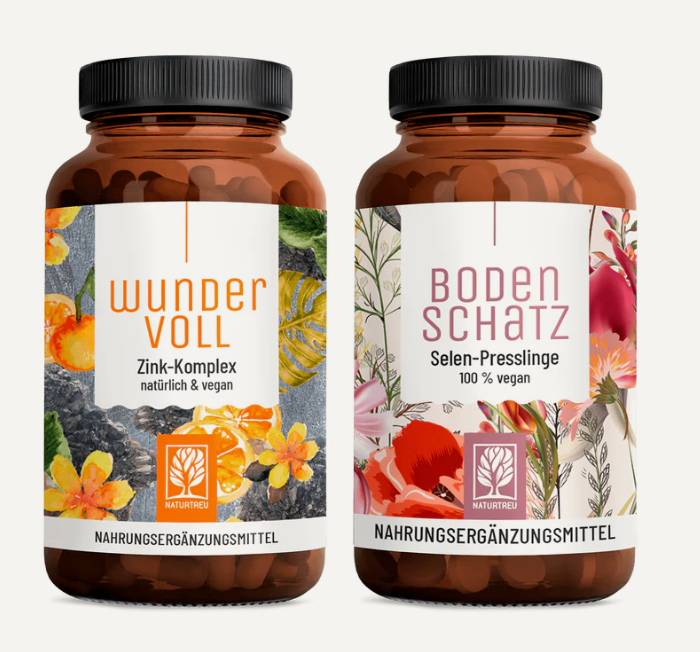
Bodenschatz + Wundervoll
- 200 µg Seper daily dose
- 25 mg Zn + 100 mg Cper daily dose
- 90daily servings
Two separate formulas in one set: three forms of selenium, three forms of zinc and buffered vitamin C.
View set at NaturtreuThe purchase is completed on naturtreu.de
Prefer only one? See the products separately
Composition and precautions
Composition
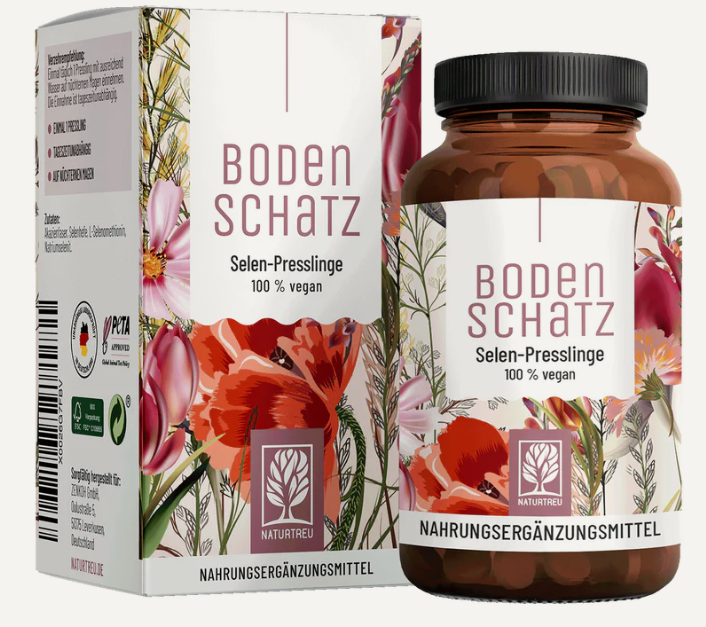
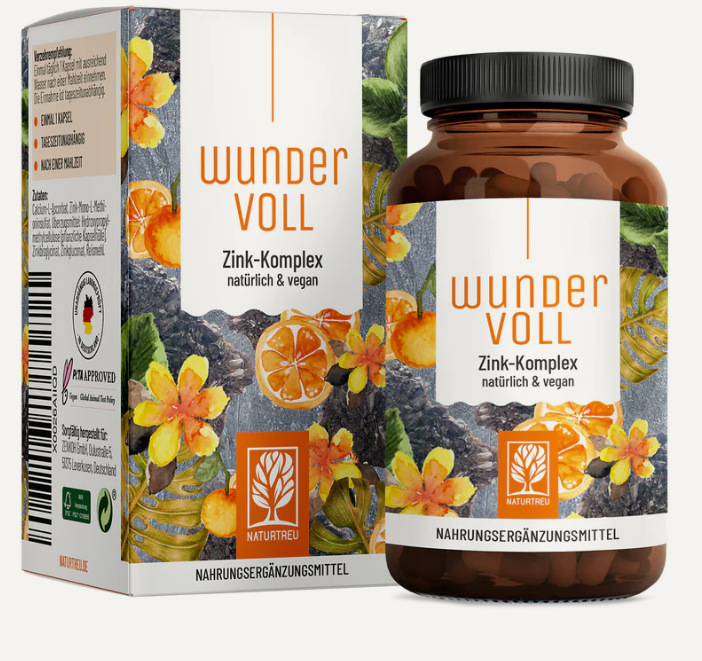
Bodenschatz provides selenium yeast, L-selenomethionine and sodium selenite. Wundervoll provides three forms of zinc and 100 mg of buffered vitamin C per daily dose.
Before taking it
- 25 mg of zinc is the upper intake level for adults from all sources. Review your total intake before prolonged use.
- The set provides 200 µg of selenium. The EFSA upper intake level for adults is 255 µg a day from all sources.
- Include other selenium supplements and selenium-rich foods, especially Brazil nuts, in the total.
- Ask your doctor or pharmacist first if you have a thyroid or kidney condition, use long-term medication, are pregnant or breastfeeding.
General educational information based on the product label. It does not replace individual medical advice and the products are not intended to treat a diagnosis.