
Reflection · Psychology · Digital Life
The Value of Sensitivity in a Hyperconnected World
A Chronicle in Two Voices
Between what is perceived, what is processed, and what remains unsaid, sensitivity can become a subtle form of intelligence.
Inner voice
Some afternoons, when I finish work, I take the subway home. On the platform, people wait impatiently. Their tired faces after a long day at work betray a certain unease. Some look at their phones. Others keep their eyes fixed on the dark tunnel where the train will arrive. The air is dense and metallic, with that distinctive underground smell that always makes me feel melancholy.
Inner voice
When the subway approaches, I hear the rails first, still faint in the distance. At that moment, almost everyone moves a little closer to the yellow line. When the doors open, people rush in, with little regard for those around them. Their faces show a restrained impatience. I usually wait a few seconds. When I enter the carriage, I sit beside the older woman at the back. She has a warm, almost maternal gaze, and her presence calms me. Around me, everyone has gone back to their screens. Few people speak, and the atmosphere feels cold and distant. Suddenly, a thread of sadness interrupts my thoughts.
Psychological Perspective
Some people process social and sensory information more intensely. They may pick up on small gestures, changes in tone of voice, facial tension, distance, rhythm, and nuances in their surroundings with unusual precision. This perceptual sensitivity is neither weakness nor exaggeration.
Psychological Perspective
When many stimuli are present at once, sensory and emotional load can rise quickly. A prolonged silence, a closed body posture, a hard expression, or an excess of noise and movement in a public space can draw more attention than they normally would. If this activation persists, the nervous system may tend to reduce stimulation and contact with the environment. Isolating oneself in these moments does not always mean rejecting others. Sometimes it is a way of reducing overload and restoring inner balance.
Inner voice
I get home after dark. There are still plenty of people out on the street, but inside the building everything is quieter. When I open the apartment door, I am met by the silence of a home where only one person lives. I leave my keys on the table and turn on the lights. I need light around me.
Inner voice
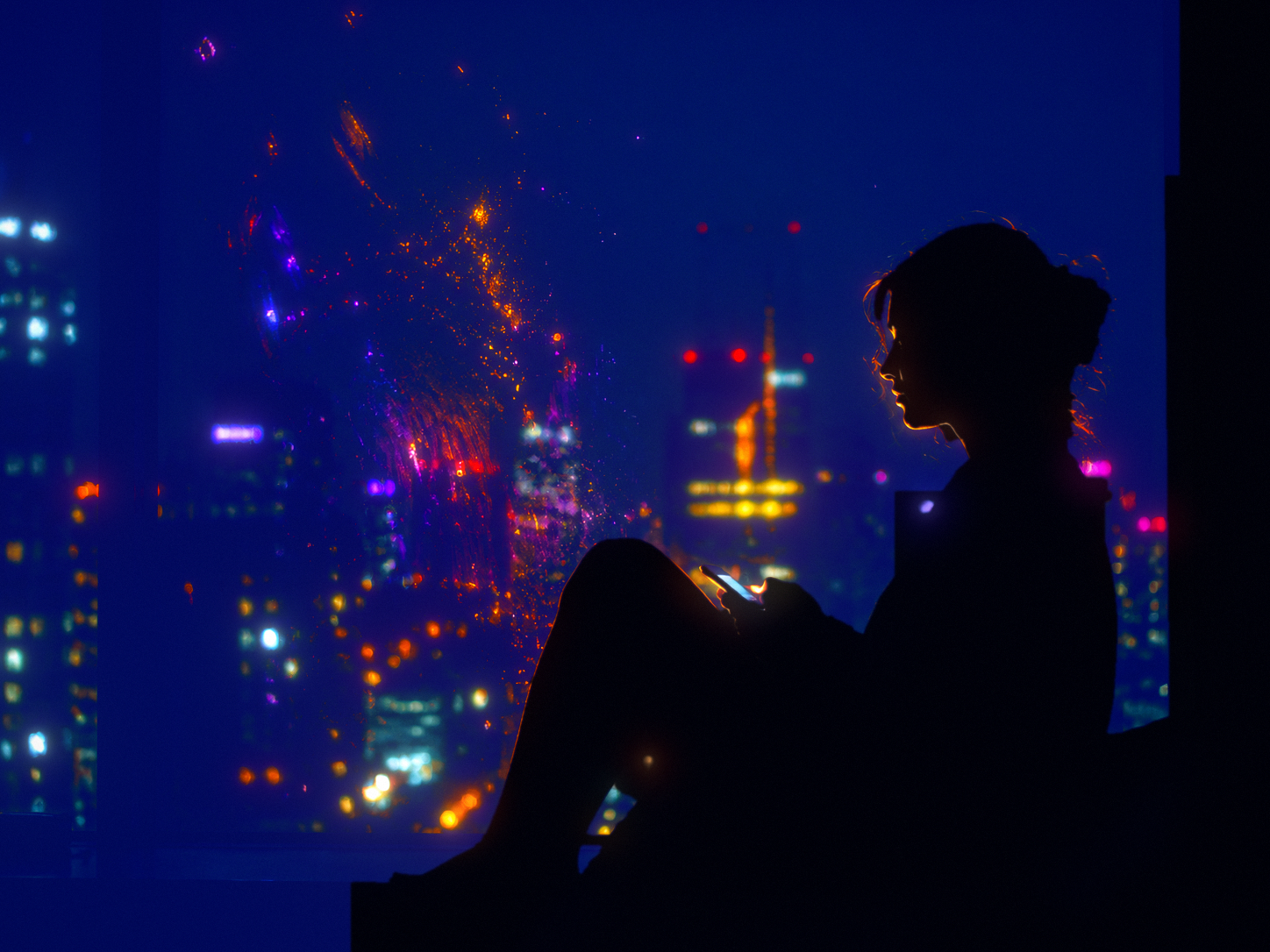
From the dining-room window, I watch the illuminated homes across the way. The bluish glow of screens fills their rooms. Some people eat dinner while looking at their phones. Others move from one channel to another without paying much attention. The city remains active, full of messages circulating at all hours. And yet, for all that activity, an absence seems to fill it.
Psychological Perspective
We have never had so many ways to communicate, and yet emotional loneliness remains. In highly sensitive people, this loneliness does not usually stem from a lack of social skills. It often has more to do with the need for a deeper connection, a kind of resonance that constant contact, notifications, and rapid exchanges cannot replace.
Psychological Perspective
The lack of direct contact reduces some of the non-verbal cues that contribute to emotional closeness, such as eye contact, tone of voice, facial expression, touch, or simply another person's physical presence. When these elements play an important role in the way someone relates to others, communication can feel emotionally less complete and may contribute to a sense of distance or loneliness, even when contact is frequent.
Inner voice
I go to bed ten minutes before ten. In the dark bedroom, a sliver of light slips through the doorway and draws geometric shapes across the ceiling. I follow them with my eyes until my eyelids grow too heavy. For me, the day ends here.
Inner voice
Outside, the city is still alive with noise. Engines that never stop, loud, shrill music spilling out of late-night venues, illuminated signs flickering and tearing through the darkness in shades of violet and fuchsia. Life never stops, indifferent to the emptiness that now surrounds me.